Aesthetic Stationery: 17 Best Picks That Earn Their Space

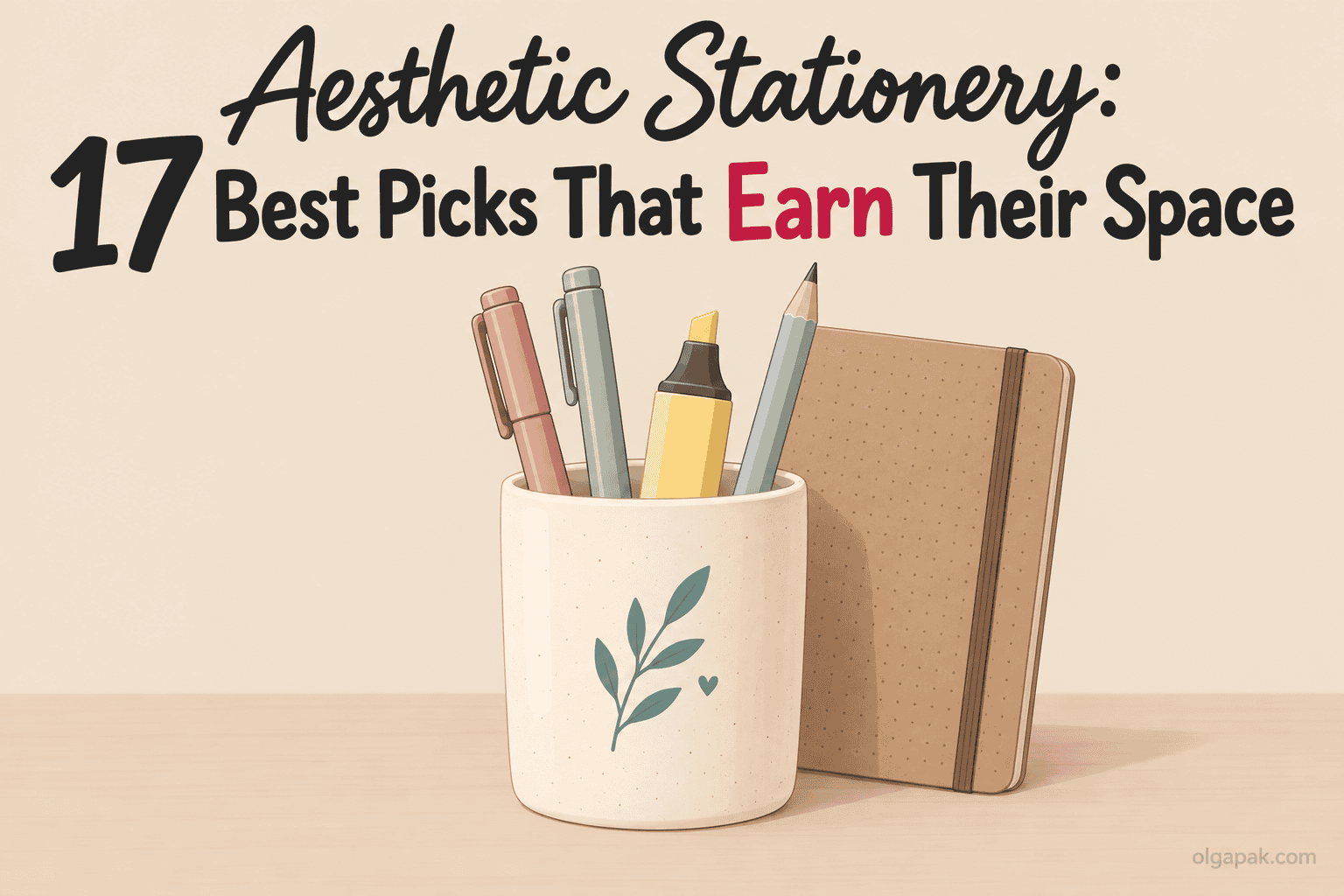
Aesthetic stationery has a reputation problem: it photographs beautifully, and then it sits in a drawer. That is not an argument against buying any of it. I find that supplies you genuinely like the look of really can make you more likely to open the notebook, and over a term that small thing adds up.
I take a lot of notes, by hand, and I have bought my share of pretty things that never earned their place. So I filtered this list by what survives daily use, not by what looks best in a flat-lay.
If you already have a method you are trying to stick with, say the Cornell method, the supplies matter far less than the habit does. They just remove one more excuse not to sit down.
This guide covers 17 picks across pens, paper, planners, tape and tabs, and the bits that hold it all together, with the real downside of each one attached.
Some links in this guide are affiliate links. As an Amazon Associate, I earn from qualifying purchases, at no extra cost to you.
Why aesthetic stationery actually works (and where it stops working)
Every autumn the same thing happens, and someone on X described it better than I could: “Every September, we convince ourselves that a new notebook, fresh pens, and a suspicious number of pastel highlighters will finally make us productive.”
That post gives the feeling a name. Researchers call it the fresh start effect, and they found that people are more likely to pursue a goal after a birthday or the start of a week, month, year or semester. September is one of those doorways, which is why the urge to buy a whole new setup arrives on schedule every autumn.
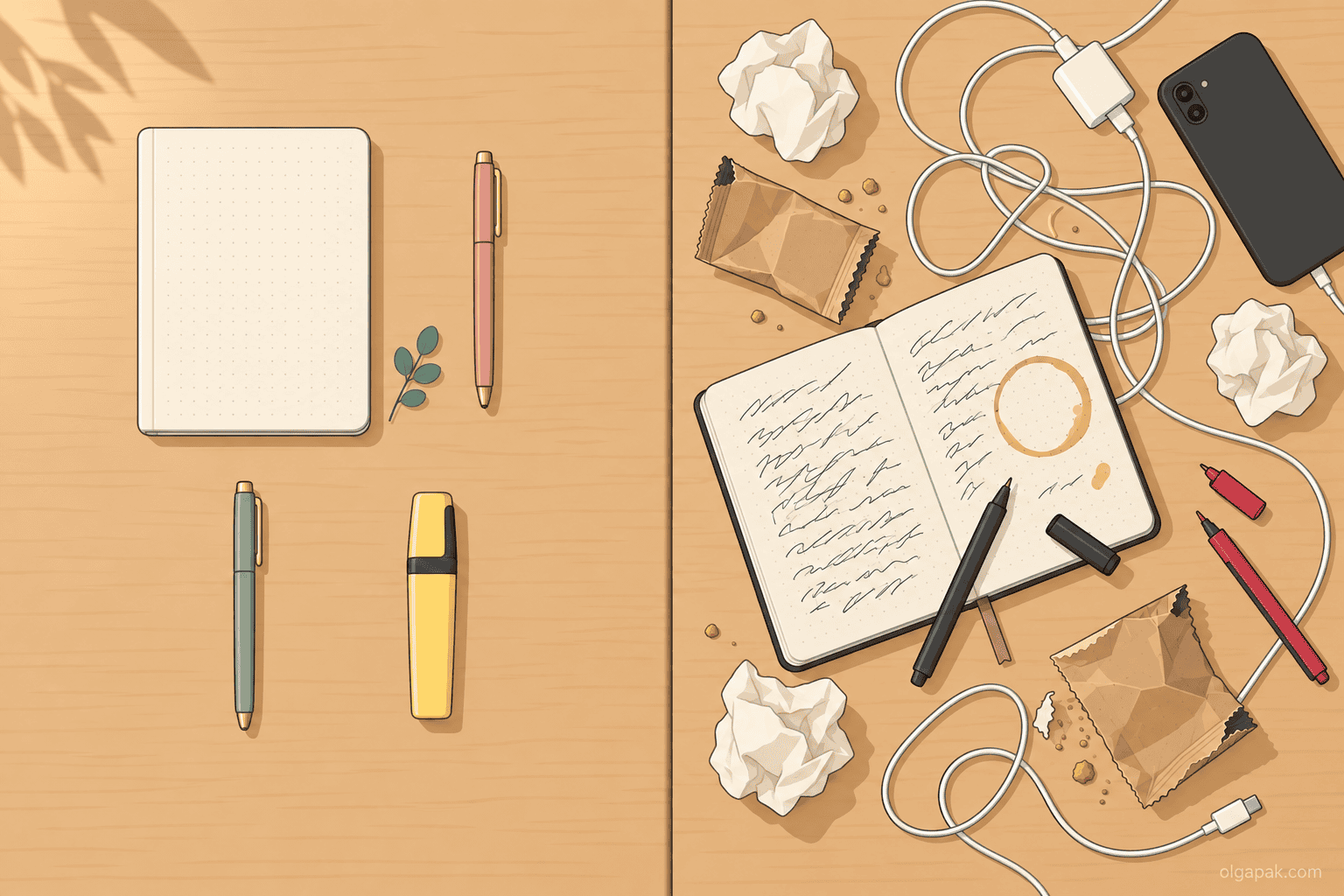
Here is where it stops working. Another poster put the gap between the feed and the desk about as bluntly as it can be put: “Aesthetic stationery, desk setups and study spaces dominate studytok feeds, making learning look stylish and effortless. My actual study area is covered in crumpled notes, snack wrappers and tangled chargers.”
So what does a nice pen actually do for you?
One thing, in my experience, and it is smaller than the marketing suggests. It lowers the cost of starting. A notebook you like the look of gets opened on the evening when you would rather not open anything, and opening it is most of the battle.
What it will not do:
- Make you productive. Nothing you can buy does that.
- Give you a system. That is the method, not the supplies.
- Survive a habit you do not already have. Pretty things decorate routines, they do not create them.
That is the honest version of the premise. I picked everything below against it.
How I picked these 17
I borrowed the filter from the stationery community itself. When r/stationery was asked what people would buy if they had to start over from zero, the top answer was not decorative at all: “A binder with very good Japanese loose leaf paper, and a good fountain pen with ink is all I would need to be happy enough.” Good paper, one good pen. That was the whole list.
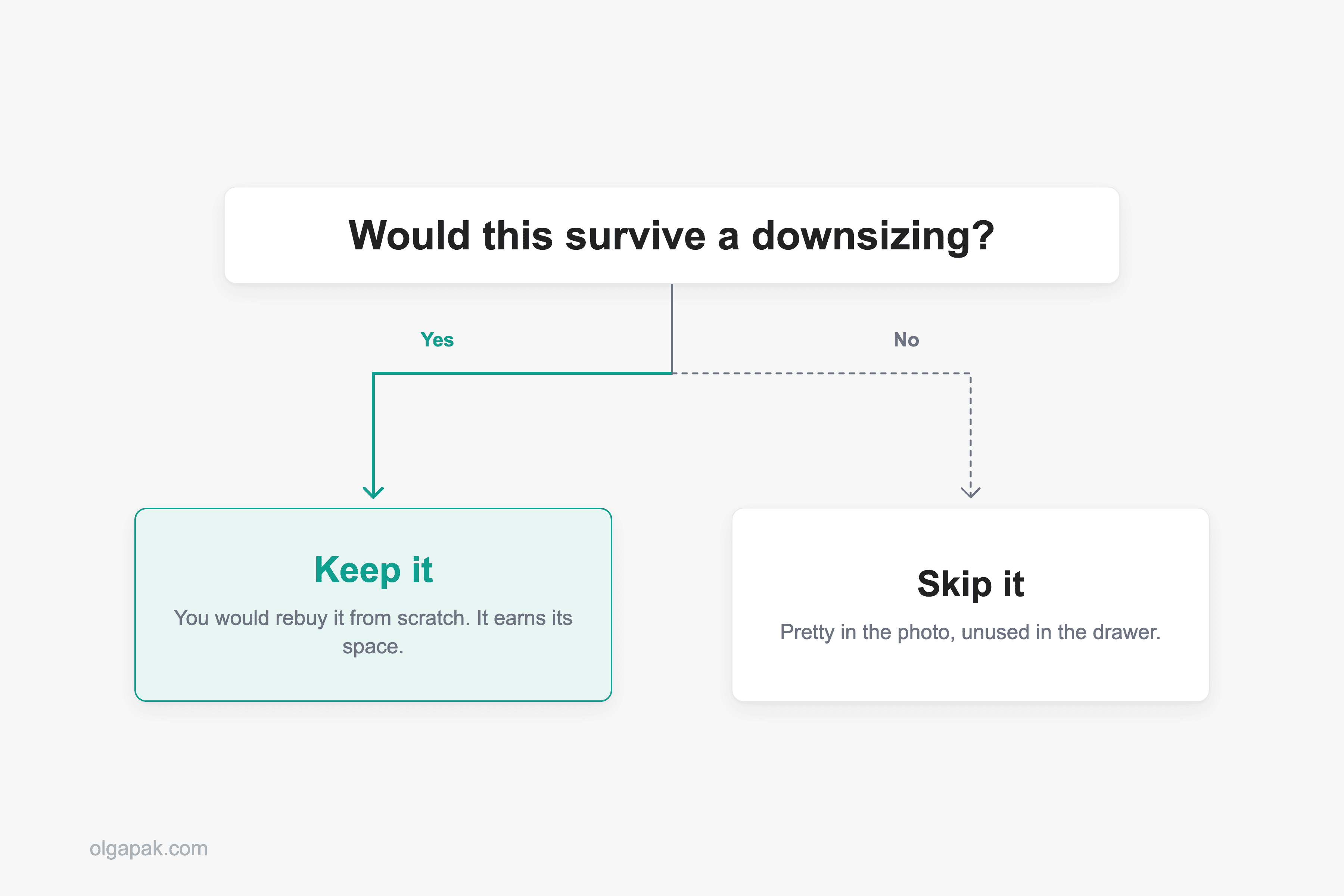
So the test for every item here is: would this survive a downsizing? The thread that made me take that question seriously pulled 2,251 upvotes and 89 comments, from someone who got rid of roughly 90 to 95 percent of a stationery stash and said they had zero regrets. A parallel thread in r/planners, arguing the hobby has tipped into overconsumption, drew 668 upvotes and 149 comments. This is not a fringe worry.
Why do people keep buying anyway? One commenter named it directly: they held onto unused supplies because of what they had already spent, until they learned about the sunk-cost fallacy, the tendency to continue an endeavour once an investment in money, effort, or time has been made. Naming it is most of the cure.
Three items below do not cleanly pass that filter as they are sold: the Zebra Sarasa Clip 10-pack, the Mr. Pen 480-tab pack, and the Bande sticker rolls. I have kept all three on the list, for different reasons, and I settle each one specifically in the last section rather than pretending the tension is not there.
Pens, highlighters and markers
This is where the aesthetic genuinely pays off, because a pen is the thing your hand touches every day. Three terms first, in plain English:
- A nib is the metal tip the ink flows through.
- Bleed-through is when ink soaks through to the back of the page (ghosting is when you only see it faintly).
- Archival or pigment ink is ink built not to fade or smear later.
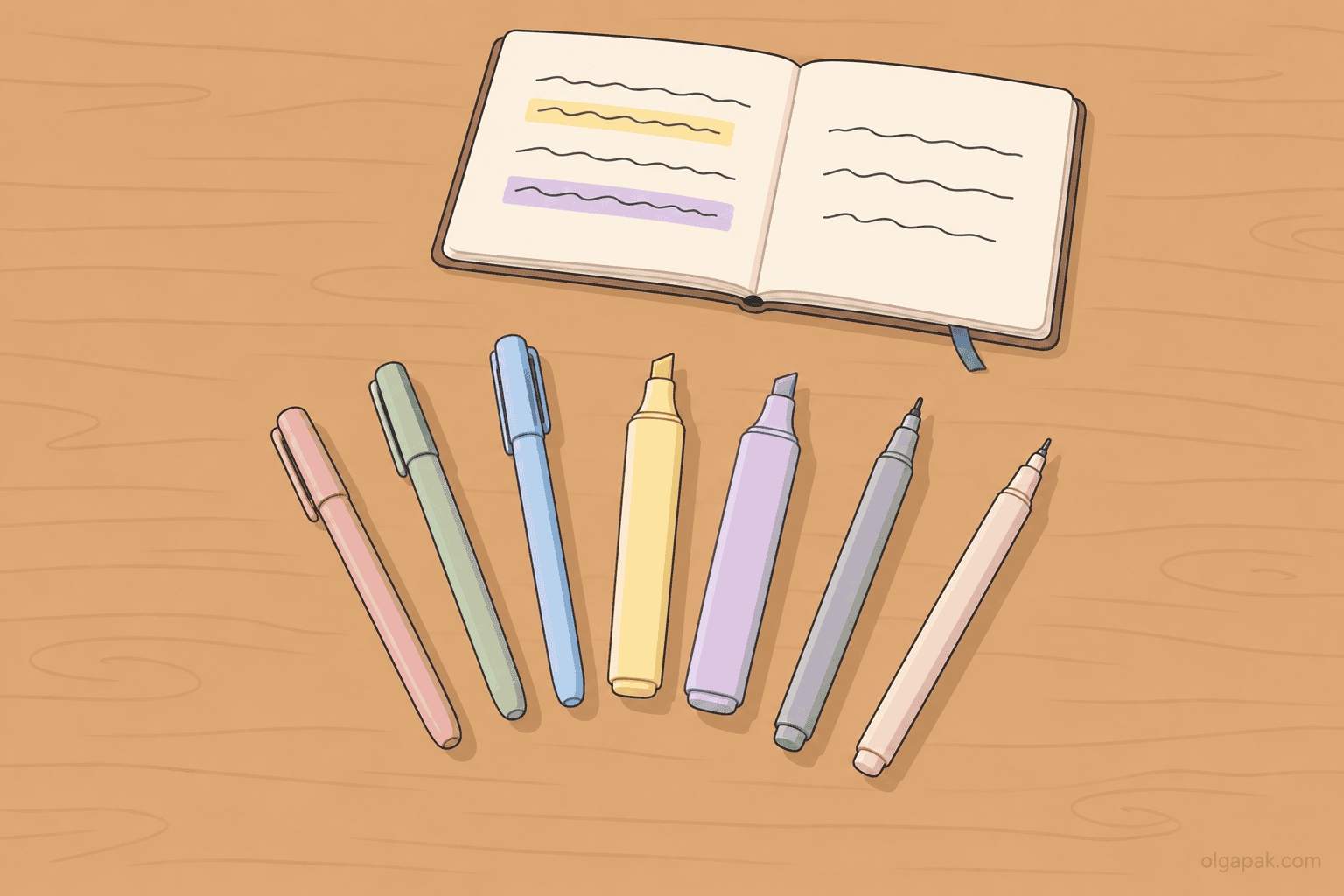
For the wider field, I went deep on the pens I keep coming back to separately.
So which one do you actually buy first?
Zebra Mildliner double-ended highlighters
The Mildliner defines this whole look, and it was named directly in the r/stationery thread about kit for a student who wanted notes both cute and useful.
Best for: anyone who wants the soft-pastel look without a page that shouts.
The downside: use the fine end as a pen and it wears faster than the broad one. The palette is also low contrast by design: lovely up close, too faint for some people to spot when scanning back.
Check the Zebra Mildliner 5-pack on Amazon
Zebra Sarasa Clip gel pens, vintage ink
The vintage ink colours are the muted counterpart to the Mildliner palette, so colour-coded notes look calm rather than like a highlighter accident.
Best for: colour-coded notes that still look calm.
Two downsides, the second bigger. Water-based gel ink smudges if a left hand drags across a fresh line. And a 10-colour set is exactly the buy-the-whole-rainbow purchase this post argues against, which is why the last section handles it rather than waving it through.
Check the Zebra Sarasa Clip vintage set on Amazon
Uni-ball One gel pens, 0.38mm
This is the workhorse of the group. A 0.38mm line stays legible at small handwriting on a dense page.
Best for: small handwriting and pages you fill edge to edge.
The downside: that tip is too fine for cheap fibrous paper, where it catches and the line feathers. A 12-pack in one colour is also a commitment before you know whether you like the nib.
Check the Uni-ball One 0.38mm pens on Amazon
Sakura Pigma Micron fineliners
Micron ink is archival pigment ink, so headers and doodles stay put instead of smearing into the highlighter you drag over them. That is why they turn up in every bullet-journal layout.
Best for: headers, doodles and layouts you want to keep clean.
The downside: pigment ink dries slower than gel on coated paper, so give it a moment. The finest nibs are fragile under a heavy hand. These are art pens by design, not all-day note pens.
Check the Sakura Pigma Micron set on Amazon
Pilot Kakuno fountain pen
The Kakuno is the friendliest way into fountain pens, and there is a real accessibility case for it. One note-taker on r/stationery: “Fountain pens for me, especially as I get older. Arthritis runs in my family and fountain pens are so forgiving and less strenuous when writing for a long time.”
Best for: long writing sessions, and anyone whose hand aches by page three.
The downside: this is higher maintenance than anything else here. Refilling is messier than clicking a gel pen, and the ink bleeds and ghosts on thin paper, dragging a paper upgrade along with it.
Check the Pilot Kakuno fountain pen on Amazon
Notebooks and paper
The consensus in the stationery threads is not about covers. It is that paper quality, not decoration, changes how writing feels.
On sizes:
- B5 is a bit bigger than the letter-width paper US school notebooks use.
- A5 is about half a sheet of letter paper.
- Dot-ruled means faint dots instead of lines, so you write straight without the page looking ruled.
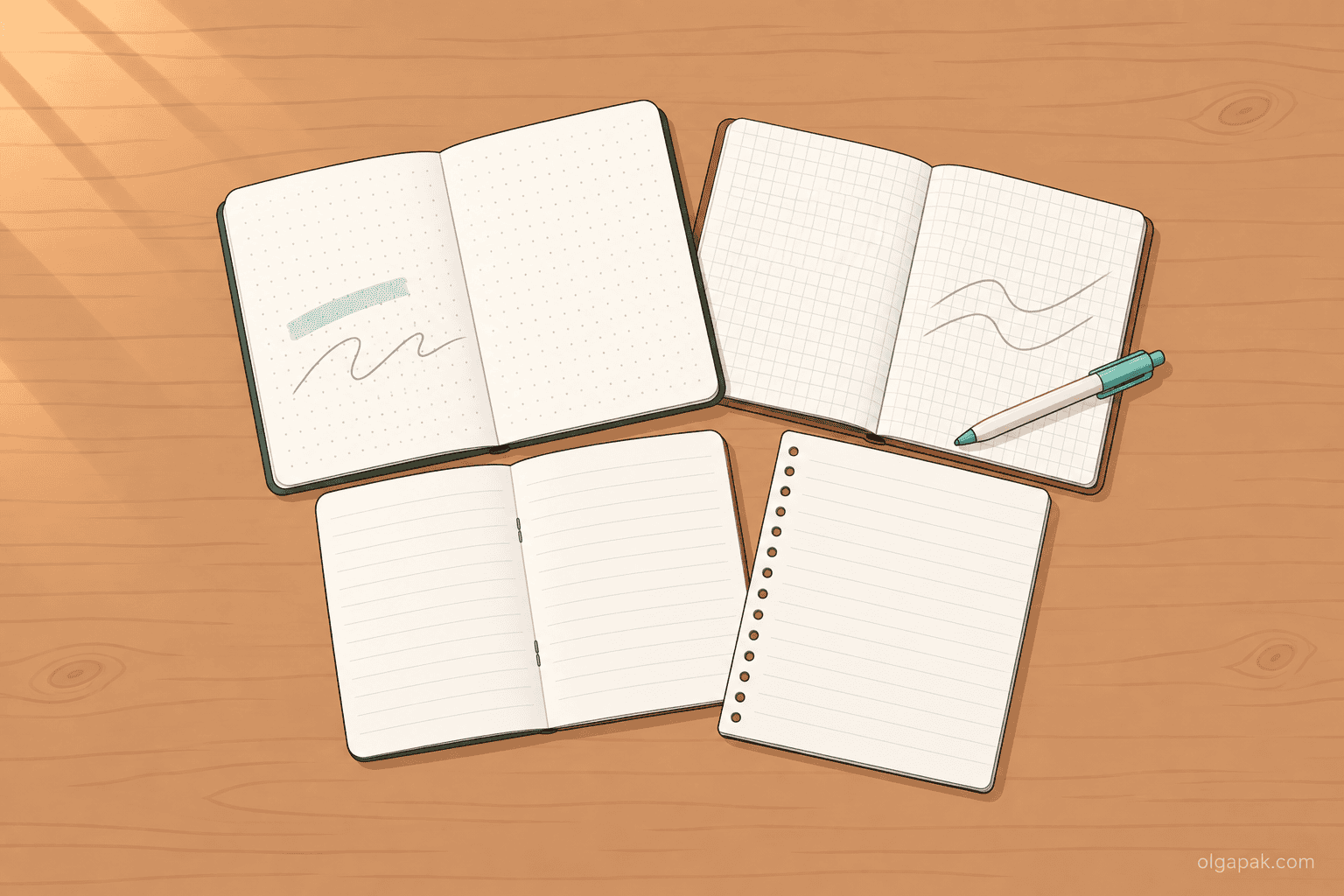
Before buying, pick a notebook by what you will actually use it for. A notebook without a job ends up half-used.
Kokuyo Campus Smart Ring binder (B5)
When a r/stationery user asked what to buy a college student who wanted aesthetic-but-useful notes, Kokuyo Campus loose-leaf binders were the top-voted answer, score 10. You can reorder, add and bin pages after the lecture.
Best for: students who reorganise notes afterwards rather than during.
The downside: a ring binder is bulkier than a bound notebook, the rings sit right under your hand on the left-hand page, and refill paper is an ongoing purchase.
Check the Kokuyo Campus Smart Ring binder on Amazon
Kokuyo Campus B5 notebooks, dot-ruled
To find out what good Japanese paper feels like without spending much, start here. The dot ruling makes a neat layout easy without the page reading as a grid.
Best for: the cheapest honest entry point to good paper.
The downside: B5 is larger than the composition size most US bags and sleeves are cut for, so check what you carry. That is an annoying discovery to make in week two of term.
Check the Kokuyo Campus B5 5-pack on Amazon
Maruman Mnemosyne A5
Maruman was the paper named in that start-over thread, by the person who said buying good paper was what changed how writing felt for them. It is for people who care more about how paper takes ink than how a cover looks.
Best for: anyone who would rather the writing feel right than the shelf look right.
The downside: the severe black cover is the opposite of cute, so it fails the aesthetic brief outright if you wanted colour. The twin-ring binding also snags in a packed bag.
Check the Maruman Mnemosyne A5 on Amazon
Midori MD Notebook, A5
The MD is the minimalist end of this category, where restraint is the look. Plain cream cover, paper chosen to be written on rather than photographed.
Best for: people whose aesthetic is “nothing on it”.
The downside: it ships deliberately undecorated. No cover art, no elastic, no back pocket, and the proper cover is a separate purchase. If you want a notebook that looks like something before you write in it, this is not the one.
Check the Midori MD Notebook A5 on Amazon
Rhodia dot pad, No.16 A5
A tear-off pad solves a common problem: the nice notebook quietly becomes scrap paper for phone numbers and half-thoughts, so you stop wanting to open it.
Best for: drafting, and protecting the good notebook.
The downside: it is a pad, not an archive. Pages tear out on purpose, so if you want to find what you wrote again in March, a bound notebook is the right buy.
Check the Rhodia No.16 dot pad on Amazon
Planners and journals
This is the most aspirational category here, and the one where the gap between buying and using is widest. As one person in r/planners put it: “It seems the goal today is not to get you to create- but to BUY to create… The biggest distraction to creating is buying.” Know the job first, whether that is planning your week or starting a bullet journal without any art skills. Buy the book second.
Hobonichi Techo 2027 Original (A6)
The Techo is the cult daily planner behind much of the aesthetic-planner scene: one page per day, A6 (roughly postcard-sized), on very thin, very good paper.
Best for: an existing daily writing habit, not an intended one.
The downside: it is a dated annual book, so buying in September wastes months you paid for, and the thin paper shows through with anything wetter than a fine gel pen. It is also the item here most likely to grow into an accessory habit of covers, stickers and pen loops.
Check the Hobonichi Techo 2027 Original on Amazon
Leuchtturm1917 A5 dotted
The default bullet-journal notebook, deservedly: numbered pages, an index at the front, and a dot grid you lay out however you want.
Best for: designing your own layout rather than living in someone else’s.
The downside: undated freedom is also undated pressure. The blank first spread is where a lot of bullet journals die, so let it look rough. The paper is thinner than you might expect, and alcohol markers bleed through.
Check the Leuchtturm1917 A5 dotted on Amazon
Washi tape, tabs and sticky notes
The cheapest category on the list, and easily the one you overbuy. Washi tape, if you have not met the term, is decorative paper tape that peels off again without tearing the page, so it gets used for flagging as much as decorating.
How much of this do you really need?
Bande washi roll stickers
Bande turned up by name in that r/stationery student shopping list. These are die-cut sticker rolls rather than plain tape, so one roll covers flagging and decoration.
Best for: people who already decorate their pages.
Now the honest part, and it is not about pack size. Of everything here, this is the item most likely to sit unopened in a drawer, exactly the pattern the downsizing thread describes. It earns its slot if you already decorate. If you are buying it to become that person, it is the first thing that turns into dead weight.
Check the Bande washi roll stickers on Amazon
Mr. Pen pastel sticky index tabs
This is the cheapest genuine upgrade here. Tabs turn any notebook into something you can navigate, so you actually go back and read what you wrote.
Best for: anyone who has flipped through 80 pages looking for one diagram.
The downside: the adhesive gives up after a few repositions, so treat placements as semi-permanent. And a 480-piece pack is far more than a single notebook will ever use, the same pack-size problem as the Sarasa set. Both get settled in the next section.
Check the Mr. Pen pastel index tabs on Amazon
Post-it Super Sticky Notes, muted palette
The muted “Neutrality” colourway is the aesthetic version of a thing already on your desk, the cheapest possible way to make a workspace look considered. No new habit required.
Best for: making something you already use look deliberate.
The downside is conceptual, not physical. Sticky notes are a capture tool, not a system. Anything you still need next week belongs in the notebook, or you get a wall of paper hiding the actual list.
Check the Post-it Super Sticky Notes on Amazon
Fixing mistakes and carrying it all
These are the two least glamorous items here, and the two that most decide whether the rest gets used at all. Neither will ever be the hero of a flat-lay.
Tombow MONO Original correction tape
Correction tape was on that community shopping list, and it is underrated for a reason nobody says out loud: fear of ruining a nice page is why expensive notebooks stay empty.
Best for: getting over the first-page fear.
The downside: the tape sits on top of the paper, not in it, so it catches the light at an angle. Some pens also skip when you write over it, fixable by slowing down, irritating either way.
Check the Tombow MONO correction tape on Amazon
Lihit Lab compact pen case
A pen case decides whether any of this leaves the house. This one is water and stain repellent and small enough that packing it is not a daily decision.
Best for: working out whether your kit is portable or theoretical.
The downside: “compact” is literal. It holds a working handful of pens, not a collection, so you have to choose. That is a feature if you are trying to buy less and a real problem if you are not.
Check the Lihit Lab compact pen case on Amazon
What I would skip (and what to buy instead)
Three items above did not cleanly pass my own filter, so here is each one settled.
The Sarasa Clip set and the Mr. Pen tabs share a problem, and it is not the product. Both categories earn their slot; the pack size does not. Buy the smallest set of Sarasas you can find, or the few colours you know you reach for, and split a tab pack with someone rather than storing 480 tabs you will never peel. The Bande rolls are a different question entirely. No smaller version fixes it, because the issue is whether the decorating habit already exists. If it does, buy them. If not, skip them and come back in six months if you find yourself wanting them.
What did not make the list at all, though it fills most roundups in this category:
- Themed erasers
- Themed pencils
- Mini pastel staplers
They photograph well and they do nothing your current eraser, pencil or stapler does not already do.
One more pattern is worth naming, because it is the mechanism. As someone in r/planners wrote: “I think seeing someone’s pretty system just fuels the feeling that I need something that I don’t have in my system.” The cure is unglamorous and free, and the same X post that opened this piece already said it: “Before joining the haul, check what you already have. Your old pens might still work.”
Spend your energy on the notes, not the note-keeping
The whole case for nicer supplies was that they lower the cost of starting. The same logic applies to what happens once the notebook fills up.
Try my free AI tools when you get to that stage. Paste in the messy section and the Text Summarizer hands back something short and scannable that you can actually revise from. Automate the mundane, and keep your energy for the pages worth writing.
FAQ
What counts as aesthetic stationery?
Aesthetic stationery is simply supplies chosen partly for how they look: muted highlighters, dotted notebooks, pastel tabs, a pen you like holding. The honest version of it overlaps almost entirely with just buying good paper and a good pen. Strip out the decoration and most of what people love about a pretty setup is that the writing itself feels better.
Does aesthetic stationery actually help you study?
Not directly, no. Nothing you buy will make you study. What supplies you like can do is lower the friction of starting, because a notebook you enjoy opening gets opened on the evenings when you would rather not open anything. That is a smaller claim than most roundups make, and it is the one I would stand behind.
What should I buy first if I am starting from nothing?
One notebook with good paper and one pen you like writing with. That is close to what r/stationery said when asked what they would buy starting over from zero: a binder of good Japanese loose-leaf paper and one good pen was the whole answer. Add colour, tabs and tape later, once you know what your notes actually look like.
How do I stop buying stationery I never use?
Name the pattern first. People keep buying and keep hoarding partly because of what they have already spent, which is sunk-cost thinking rather than a real reason. The practical fix is duller: inventory what you own before you buy anything, and ask whether the thing would survive a downsizing. Your old pens probably still work.
Is expensive stationery worth it?
Paper is where money changes the experience most, and decoration is where it changes it least. Better paper genuinely alters how a pen feels and whether ink soaks through to the next page. A prettier cover changes how the notebook looks on a shelf. If you only upgrade one thing, upgrade the paper.