51 Screen-Free Hobbies to Try When Scrolling Gets Old

Most lists of screen-free hobbies hand you a wall of nouns and assume the hard part is choosing. It isn’t. The hard part is that the phone is already there, it asks nothing of you, and nothing else in the room is competing for the evening.
I spent eight years in aviation PR before going back for a Master’s, and the thing that finally pulled me out of the after-dinner scroll was not willpower. It was having something with a next session in it.
If you have already decided to cut your screen time, this is the part that comes after. The hours you claw back go somewhere, and unless something else claims them, they go straight back where they came from.
A list only helps if it tells you what each option involves and what it costs. Below are 51 hobbies, grouped so you can skip to the kind you would actually enjoy, each carrying an honest note on the price of starting, and then the part nobody writes about: how to still be doing it in March.
What counts as a screen-free hobby (and what this list leaves out)
Everything here has a learning curve. There is a next session, a first bad attempt, and a version of you six months from now who is better at it than you are tonight. That line matters, because a hobby and a way to fill ten spare minutes are two completely different asks.
If what you want is the ten-minute version, I have written up a long list of things to do instead of reaching for your phone separately, and you should go there instead. If you want to clear the ground first, a structured seven-day reset is the intensive option.
This list is for adults. No kids’ section, no teen section, no crafts to do with your nephew.
I am not good at most of these, for the record. I am just stubborn about the second session, and the second session is where a hobby actually starts.
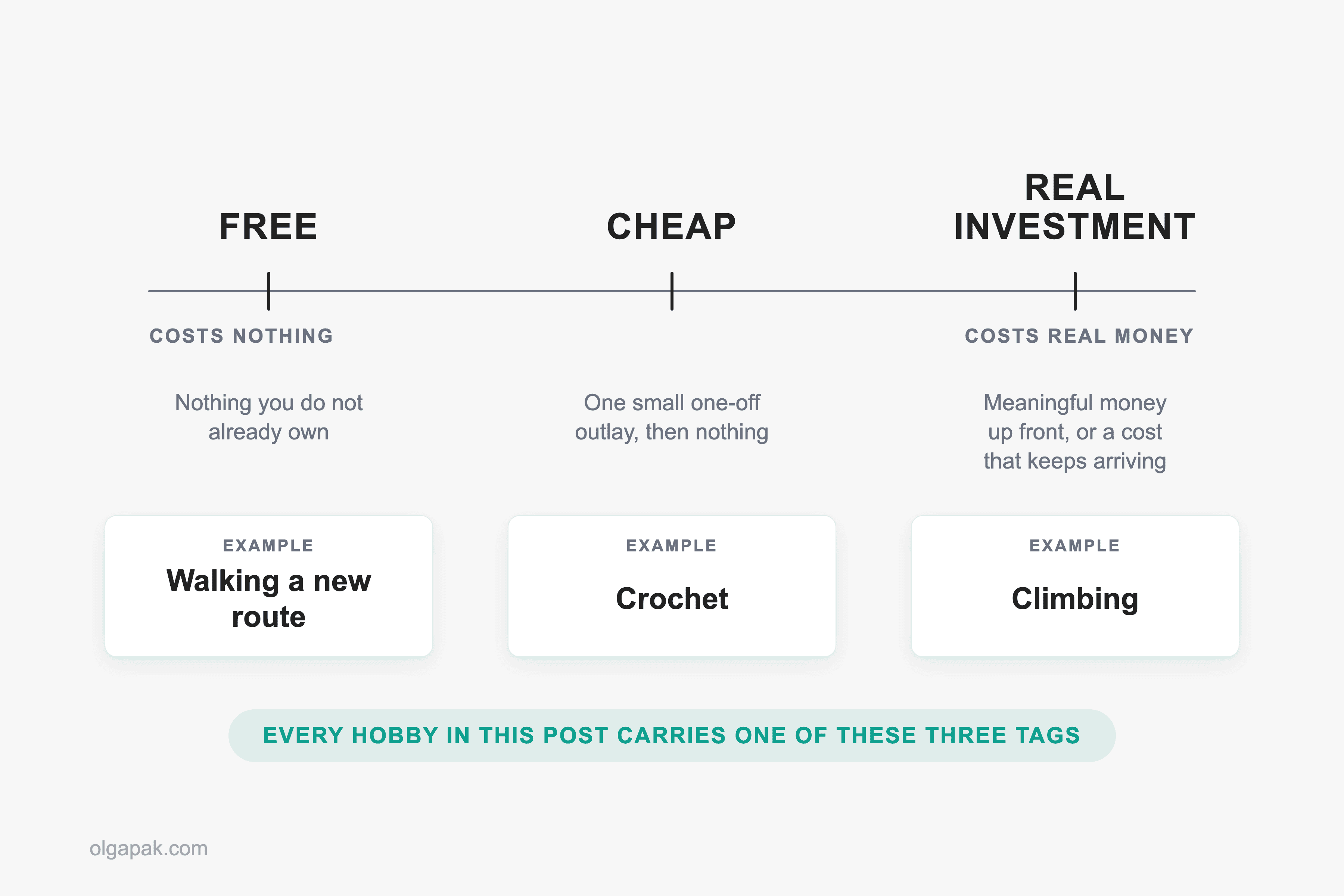
Every entry below carries a cost tier, and I mean the tiers strictly:
- Free. Nothing you do not already own. Not cheap. Free.
- Cheap. One small one-off outlay, then nothing.
- Real investment. Meaningful money up front, or a cost that keeps arriving.
The tiers exist because of a complaint I kept reading while researching this. “Every article about unplugging from screens suggests these expensive hobbies like they’re free alternatives,” wrote u/vivian_banshee03 on r/I_DONT_LIKE, in a thread that exists almost entirely to make that point. The complaint lands, and I would rather this post not earn it.
One bit of vocabulary before the list: you will see these called analog hobbies, which just means the activity happens off a screen, with your hands, in the actual room. The phrase caught on because the feeling behind it is everywhere. Oxford University Press made “brain rot” its word of the year in 2024, and the year after that it picked “rage bait”.
Free screen-free hobbies you can start this week
Start here if money is the real obstacle, because the most popular answer in the biggest thread I read on cheap, offline hobbies was also the cheapest one. Walking, running and hiking came top by a distance, from people who had explicitly said they could not spend anything on this.
Free here is the strict version. If an entry needed a purchase before you could begin, it is in one of the sections below instead.
- Walking a new route (Free). Same shoes, unfamiliar streets. Pick a direction you never take and follow it until it stops being interesting.
- Running (Free). Start with the version that feels too easy: one minute running, two walking, repeated until the loop is a habit instead of a test.
- Hiking (Free). A packed lunch and the nearest patch of hill, coast path or country park. The gear question can wait until you have done it four times.
- Birdwatching (Free). Learn the five birds that already live on your street before you go anywhere near binoculars. Identification is the game.
- Litter-picking a local route (Free). Claim one street or one stretch of towpath and clear it on a loop you already walk. Visible progress, and after a few months you know one stretch of ground better than anyone else who walks it.
- Reading from the library (Free). A card and a hold list turn reading from a vague intention into a queue with due dates attached.
- Journaling (Free). Any notebook you already own. Three honest lines about the day beats a beautiful spread you abandon in week two.
- Sketching (Free). Draw the same mug once a week for a month, in whatever notebook you already have. Watching your own fourth attempt beat your first is what keeps you going.
- A card game (Free, Cheap if you need a deck). Learn one properly, cribbage or gin rummy, and you have something to do with your hands and with another person.
- Stargazing (Free). Learn to find three constellations and whichever planets are up. Your eyes are the equipment.
- Geocaching (Free). A free app points you at small containers hidden near you, and the rest is a willingness to go outside and poke about in hedges.
- Second-hand jigsaws (Free through swaps, Cheap to buy). Local exchange groups keep these circulating, which is how people do this without accumulating a wall of boxes.
Hands-busy hobbies: crafts, making, and building
What are your hands doing right now?
“i am looking for something tactile that keeps my hands busy so i stop checking notifications,” wrote u/Jji-Terada on r/Hobbies, asking what absorbs your focus with zero screens involved. The answers were drawing, painting, plastic models, miniatures, LEGO and clay, and that reply sat at the top of the thread.
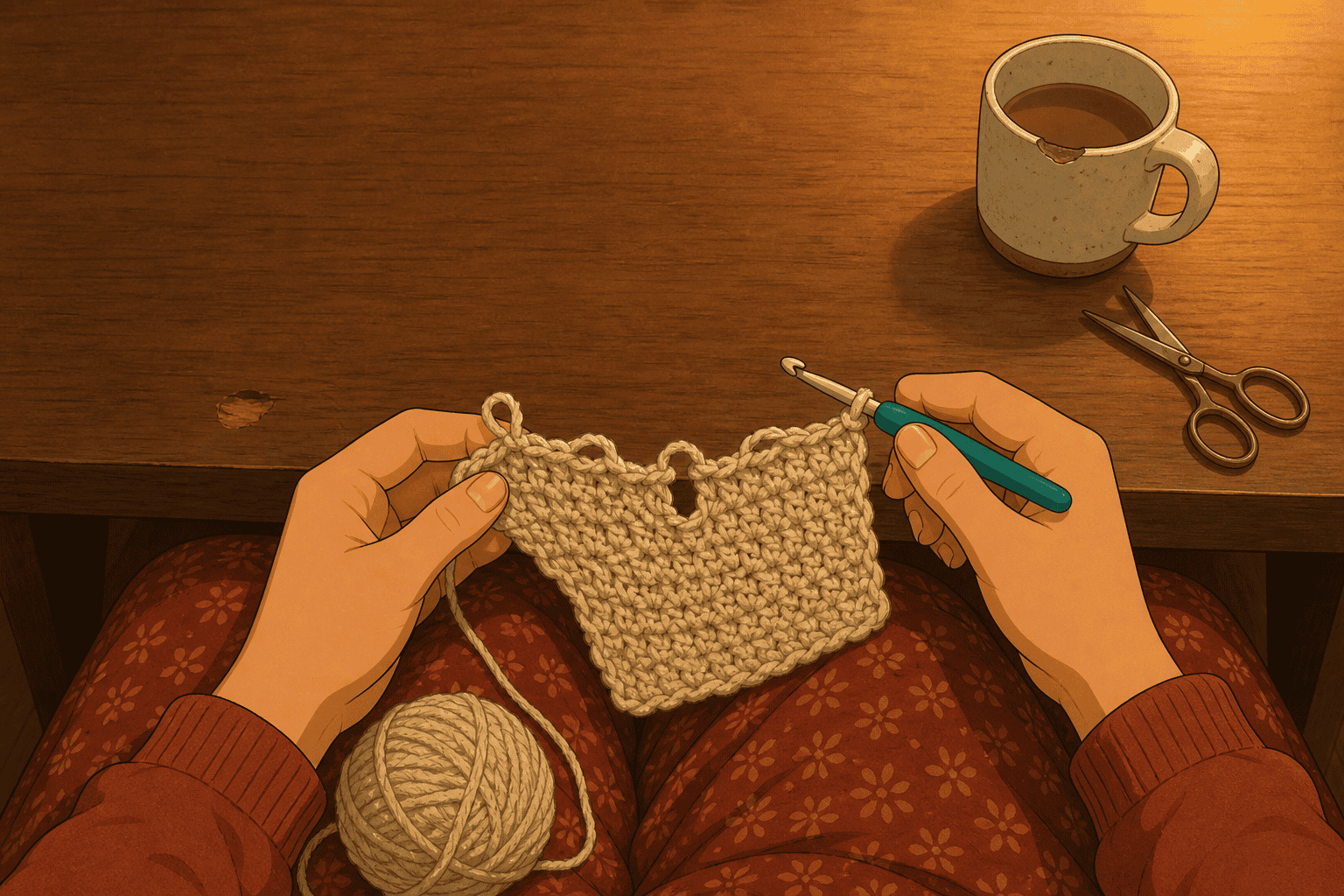
These hobbies borrow the thing mindfulness practice trades on: attention with somewhere to sit. Mindfulness practice supports focus. A row of crochet works on a similar bargain: one small repeatable motion holds your hands, so your attention stops shopping for the next notification.
- Crochet (Cheap). One hook, one ball of yarn. Start with a square rather than a jumper, and expect the first square to be a trapezoid.
- Embroidery (Cheap). A hoop, a needle, a scrap of cotton. It travels well and you can put it down mid-stitch without losing your place.
- Hand-sewing and mending (Free). A needle and thread from the kit already in a drawer, and everything you fix is something you already own: a hem, a button, the hole in the pocket you keep meaning to sort.
- Knitting (Cheap). Slower to get going than crochet, kinder to the finished object. Dishcloths before anything anyone has to wear.
- Junk journaling (Free). Gluing tickets, receipts, packaging and scraps into a book. No drawing ability required, which is exactly the appeal.
- Paper craft and origami (Free). Paper you already have, plus a handful of folds you learn by heart. Repeat the same crane until it stops being fiddly.
- Plastic model kits (Cheap to Real investment). One starter kit is cheap. Paints, brushes and an airbrush are where the tier quietly changes.
- LEGO (Real investment). An honest tier for a genuinely absorbing adult build. It is not a cheap way to spend an evening and I am not going to pretend otherwise.
- Clay and air-dry sculpting (Cheap). Air-dry clay skips the kiln entirely, so you can make a wonky dish on the kitchen table tonight.
- Painting, watercolour or acrylic (Cheap). A pad, three brushes, a small set of paints. Paint the same window view in different light.
Screen-free hobbies that get you outside
Gardening is the single most recommended hobby in everything I read for this post. It was a top or near-top answer in three of the five Reddit threads, and the most-engaged post on the subject on X was a man simply listing what he had planted this year. It also puts you outdoors on purpose, and spending time in nature is good for your mental health.
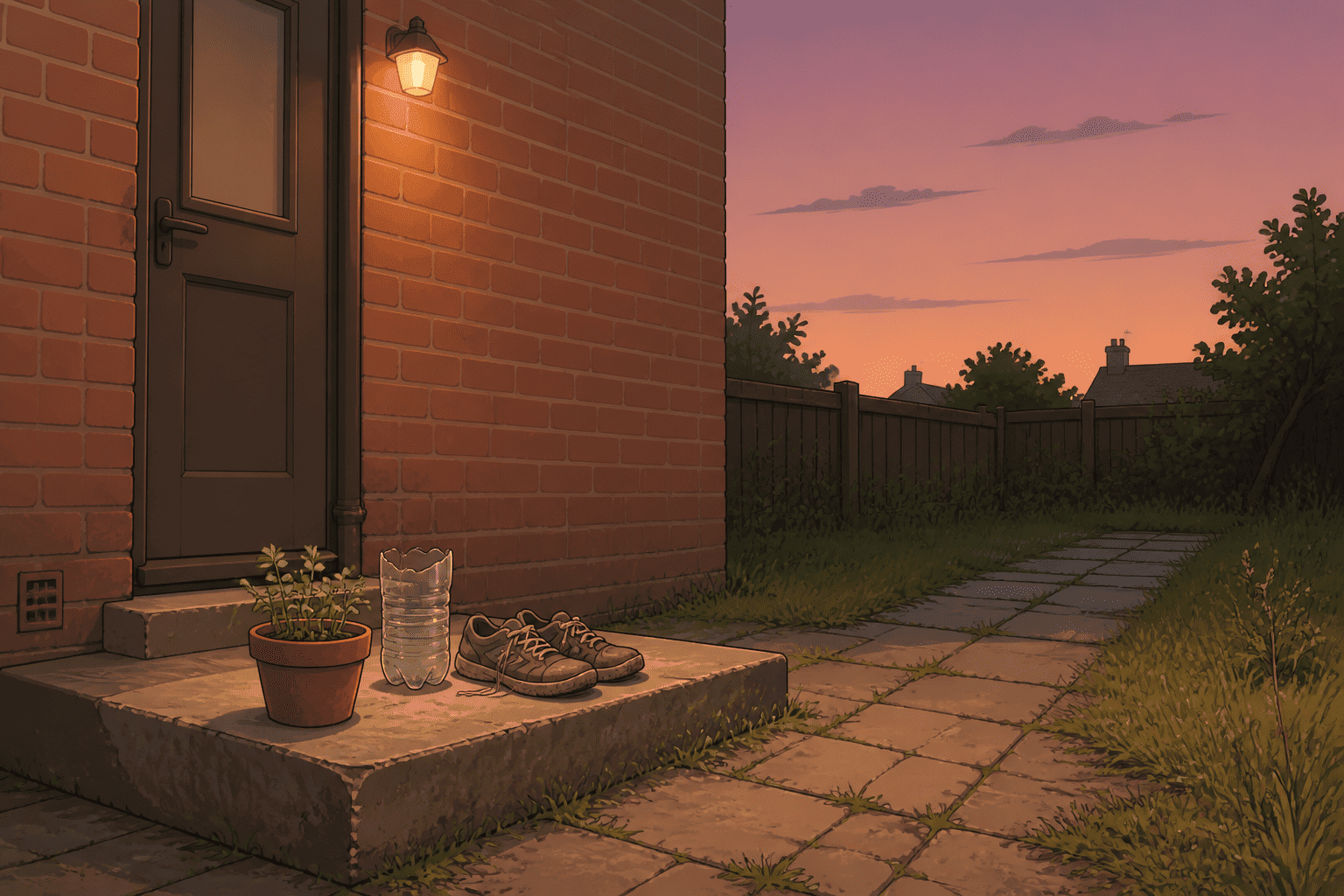
Outside is also not automatically expensive. “I got $20 skates from Walmart and started learning how to roller skate on the sidewalk in front of my house. It’s so fun,” wrote u/brainbl0ck on r/povertyfinance.
- Gardening, or one windowsill pot (Cheap). Seeds, soil, something to put them in. Herbs reward you fastest and are the hardest to kill.
- Foraging (Free). Start with two things you can identify with total certainty, blackberries and elderflower, and refuse to touch anything else.
- Cycling (Real investment, or Free if the bike is already in the hallway). The bike is the barrier. Everything after it is a route and a pump.
- Swimming (Cheap). Pool, costume, goggles. One of the few hobbies where an hour disappears without you deciding it should.
- Roller skating (Cheap). Discount-store skates and a flat stretch of pavement is a genuine starting point, not a compromise version.
- Disc golf (Cheap). One disc and a local course. A commenter in the cheap-and-offline thread called it simply cheap and outside, which is a hard pair to beat.
- Climbing (Real investment). Shoes, a pass, usually a session fee. Indoor walls are sociable in a way that asks very little of you socially.
- Orienteering (Free to Cheap). A map, a compass, a local club event. Navigation is the skill, and it improves faster than you expect.
- Urban sketching (Free). A pocket notebook and a pen you already own, drawing what is actually in front of you in the town you already live in.
Screen-free hobbies that build a real skill
None of these has to become a side project, an income stream, or content. You are allowed to be mediocre at something on purpose, for years, because it is yours. One commenter on r/simpleliving listed piano, ceramics, quilting and journaling as their own set, and none of it was going anywhere except into their evenings.
So what is the payoff for something you will never be paid for? Getting better at it, which turns out to be enough. Going back to study after eight years in a job I was already competent at taught me that being a beginner is uncomfortable for about three weeks and then becomes the whole appeal.
- An instrument (Real investment new, Cheap second-hand). Fifteen minutes daily beats a two-hour Sunday. A borrowed or second-hand instrument moves this whole tier down.
- Singing (Free). Costs nothing, embarrasses everyone, improves quickly. Sing along to things pitched slightly too high for you.
- A language from paper materials (Cheap). A grammar book, a notebook, index cards. Slower than an app and much harder to quietly abandon.
- Chess (Free to Cheap). A set and one opening you genuinely understand. Puzzles from a book beat games against a machine that never explains itself.
- Calligraphy and hand lettering (Cheap). A nib or a brush pen, plus drills. Twenty minutes of the same stroke is the entire practice.
- Longhand writing (Free). Fiction, letters, terrible poetry, in a notebook you already have. A pen removes the tab you would otherwise have opened.
- Whittling or woodwork (Cheap for whittling, Real investment for woodwork). A knife and a stick of green wood makes a spoon. A workshop makes everything else.
- Dance (Free at home, Cheap to Real investment for classes). Learn one style properly. Repetition in your own kitchen is most of the work anyway.
Food, growing things, and looking after something living
The cheapest way into this category is also the one readers reach for when they are arguing that hobbies do not have to be expensive: baking, specifically without buying a stand mixer. A bowl, a wooden spoon and your hands will produce everything on this list.
This is also the category with the shortest wait for a result. You get something edible, or something visibly alive, within the same week you started, which matters a great deal in the fortnight where a new hobby is most likely to quietly stop happening.
- Baking, no stand mixer required (Cheap). Pick one thing, a plain sponge or a batch of scones, and make it six times until it stops being a recipe.
- Cooking one cuisine properly (Cheap). Not random dinners. One cuisine, its handful of core techniques, cooked until you stop reading the method.
- Bread (Cheap). Flour, water, salt, yeast. The feedback loop is slow, honest and impossible to fake.
- Fermenting and pickling (Cheap). A jar, salt, a vegetable, and the patience to leave it alone. Sauerkraut first, everything else after.
- Houseplants (Cheap). One plant you learn properly beats six you water on the same day out of guilt.
- Feeding and watching garden birds (Cheap). A feeder at a window, kept filled. The hobby is the noticing, and it works from a flat with no garden at all.
Screen-free hobbies you do with other people
This category sits last because it asks the most of you. The person who started the biggest thread in my research said flatly, in the same breath as asking for hobby ideas, that they did not have any friends either, and I am not going to pretend a list solves that. What a hobby does is give you a reason to be in a room with people that is not “meeting people”.
Tabletop role-playing is the clearest example. One post on X described Dungeons & Dragons as a small-scale analog hobby built on imagination, collaboration and face-to-face interaction that does not require much money to play, which is a fair description of what the whole category is for.
- Tabletop role-playing (Cheap). Dice, paper, pencils, and one person willing to run the game. One rulebook covers the whole table, so the cost splits six ways.
- Board games (Cheap). Modern games or a local games café. Two decent boxes will carry a year of evenings.
- A choir or community group (Free to Cheap). Most take absolute beginners and audition nobody. Turning up twice is the whole entry requirement.
- A local sports club (Cheap). Running clubs, badminton, five-a-side. The schedule is the point: it happens whether or not you feel like it.
- Volunteering (Free). A shift at a food bank, a conservation group, a repair café. Regular beats heroic every time.
- Letter-writing and postcards (Cheap). Slow, deliberate, and the only item here that reliably makes somebody else’s week.
How to pick one, and actually stick with it
So which one do you actually pick?
Nobody fails at hobbies for lack of ideas. You have just read 51 of them, and the list was never the hard part.
- Pick one, not five. The classic failure is starting four things in a fortnight and finishing none of them. Choose the one you felt something about while reading, and let the others wait.
- Make the first session embarrassingly small. Twenty minutes. One row of crochet. One lap. Small enough that skipping it would take more effort than doing it, because the session you can do on a bad evening is the one that builds the habit.
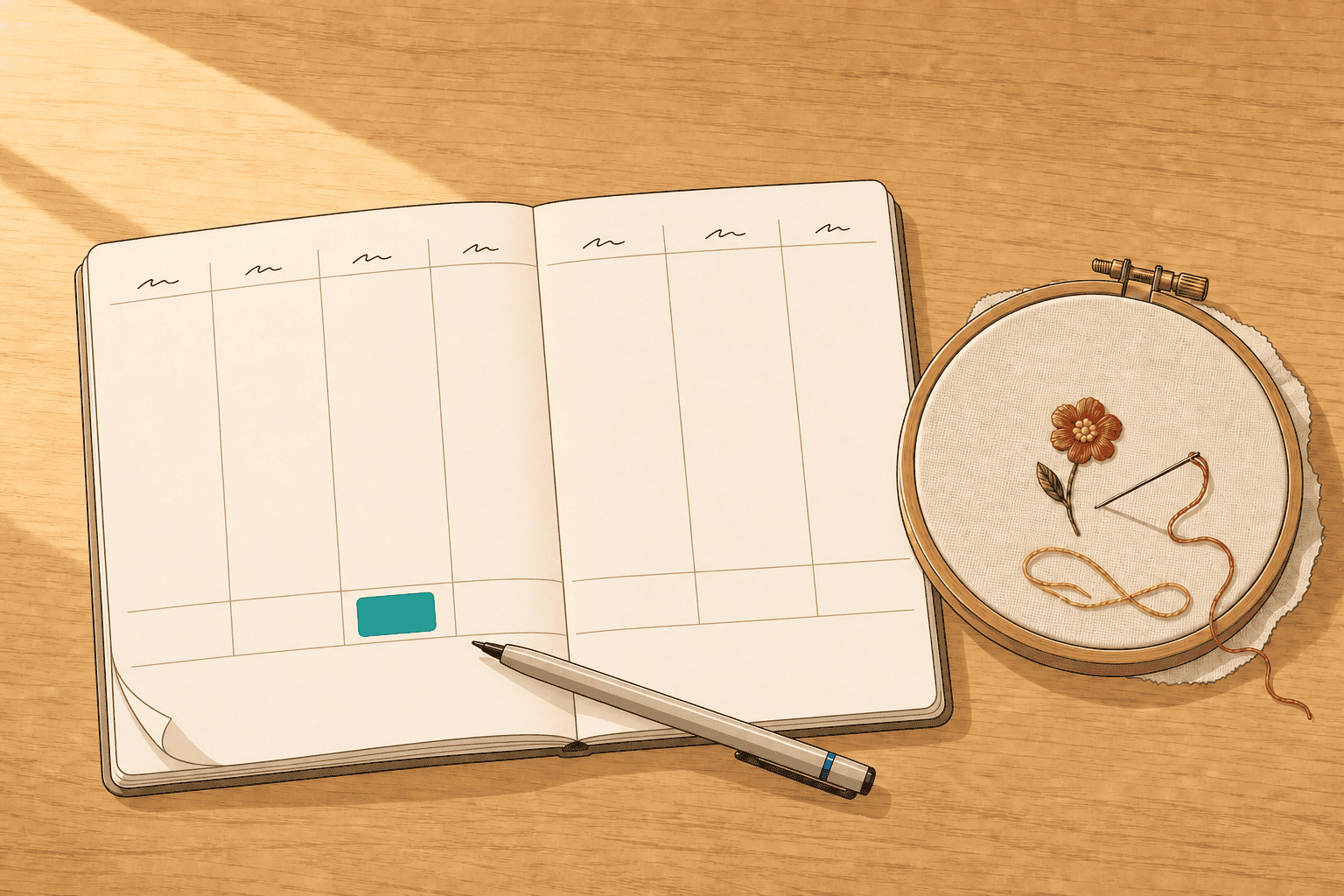
- Give it a slot. A reclaimed hour refills with whatever is nearest, and the nearest thing is your phone. When you plan your week, put the hobby in as a real commitment rather than a hope, and give it a block on the calendar the same way you would a class you had paid for.
- Do not buy the good kit yet. This rebuttal comes from readers, not from me. “You don’t go out and buy expensive equipment as a beginner in the hobby, before you even know how much you like it,” wrote u/steepdrinkbemerry on r/I_DONT_LIKE, and it is the most useful sentence in this post. Beginner kit is enough to find out whether you like the thing, and the good version will still be there in six months if you do.
Then expect the screen to creep back in, and let it. “But there is plenty of screen time involved once you get deep into something. Researching projects, finding patterns, etc.,” as one commenter on r/simpleliving put it. Someone on X summed up their own year as “cozy, screen-free hobbies (minus the switch)”, and that parenthetical is the honest version.
Looking up a pattern is not a relapse. The goal was never purity. The goal was that your evening has somewhere else to go.
When money, space, or time is the real problem
“Looked up pottery classes. $250 for 8 weeks. Plus $40 for clay. Plus $15 per piece to fire in the kiln. So… $300 minimum to start touching clay.” That is u/vivian_banshee03 again, and the arithmetic is not the problem. The problem is that pottery gets sold as the cheap alternative to scrolling.
So what do you do when the answer to every suggestion is that you cannot afford it? You go to the twelve entries in the free section, which are real hobbies with real learning curves and no purchase attached, and you take the second-hand route into everything else. Charity shops, marketplace listings, library equipment loans, and the swap groups that keep jigsaws, yarn and half-finished projects moving between people who have finished with them.
Almost every hobby has a version that starts at nothing and a version that starts at a lot, and the marketing you have read only ever describes the second one.
Space is the quieter constraint, and it rules out less than it looks like it does. Everything that fits in a drawer is already on this list: embroidery, sketching, origami, cards, calligraphy, longhand writing, journaling, a hand-sewing kit. The ones that need a table can borrow one.
Libraries, community centres and makerspaces exist precisely so the table is not your problem, and a shared allotment or a windowsill pot covers most of the growing category.
Time is the one people misjudge in the wrong direction. Twenty minutes is a session, and four of those across a week adds up faster than a month of good intentions ever has. A hobby does not need a free Saturday to be a hobby, and the version of this that survives is almost always the small one that fits on a weeknight, not the ambitious one waiting for a weekend that never clears.
Pick one, and give it a night this week
Choose one entry. Put it on Thursday. Do the embarrassingly small version of it and see whether you want the next session, which is the only test that has ever told me anything.
And because part of your screen time is admin that has to happen regardless, try my free AI tools to automate the mundane. The Email Generator turns a one-line prompt into a first draft, so the twenty minutes you were going to spend rewriting the same polite email goes to the thing you actually chose.
FAQ
What are some hobbies that don’t require screens?
Plenty, and they sort into six groups: free outdoor and quiet ones like walking a new route; hands-busy crafts like crochet; outdoor pursuits like gardening; skill-building ones like learning an instrument; food and growing things like bread; and social ones like tabletop role-playing. The full 51, each with a cost tier and a line on what it actually involves, are in the sections above.
What screen-free hobbies can I do for free?
Walking a new route, running, hiking, birdwatching, litter-picking a local route, reading from the library, journaling, sketching, stargazing and geocaching all cost nothing to start. So do foraging, longhand writing, singing, hand-sewing and mending, junk journaling, origami, urban sketching and volunteering. Free here means free in the strict sense: nothing you do not already own, no starter kit, no class fee. It does not mean cheap, and the difference is the reason this post tiers every entry rather than waving vaguely at affordability.
What are good screen-free hobbies for adults?
All 51 here are written for adults, with no kids’ or teens’ section anywhere in the list. Rather than sorting by age, sort by temperament. If you want your hands occupied while your mind settles, start in the crafts section. If the problem is that you never leave the flat, start outdoors. If you miss learning something for its own sake, pick from the skill-building section. If the evenings are lonely rather than empty, start with the social category, where the structure of a club or a game night does the hard part for you.
How do I stick with a hobby instead of quitting after two weeks?
Pick one thing, not five, because starting four hobbies in a fortnight is the most reliable way to finish none. Make the first session so small it feels silly: twenty minutes, one row, one lap. Give it a fixed slot in your week rather than hoping for spare time, because reclaimed hours refill with whatever is nearest. And do not buy the good equipment until you know you like the hobby, which is advice that comes from experienced hobbyists rather than from me. Beginner kit is enough to find out.
Does it still count if my hobby uses a screen sometimes?
Yes. Once you get into almost anything, you end up looking up a pattern, a technique, a recipe or a part, and hobbyists say so themselves. That is not a relapse and it is not a failure of discipline. The point was never screen purity. It is that the evening has somewhere else to go, and that your hands and attention are on a physical thing for most of the time you spend on it. Judge it by where the hours actually went, not by whether you ever opened your phone.