Dopamine Detox: What It Is and How to Actually Do It Right

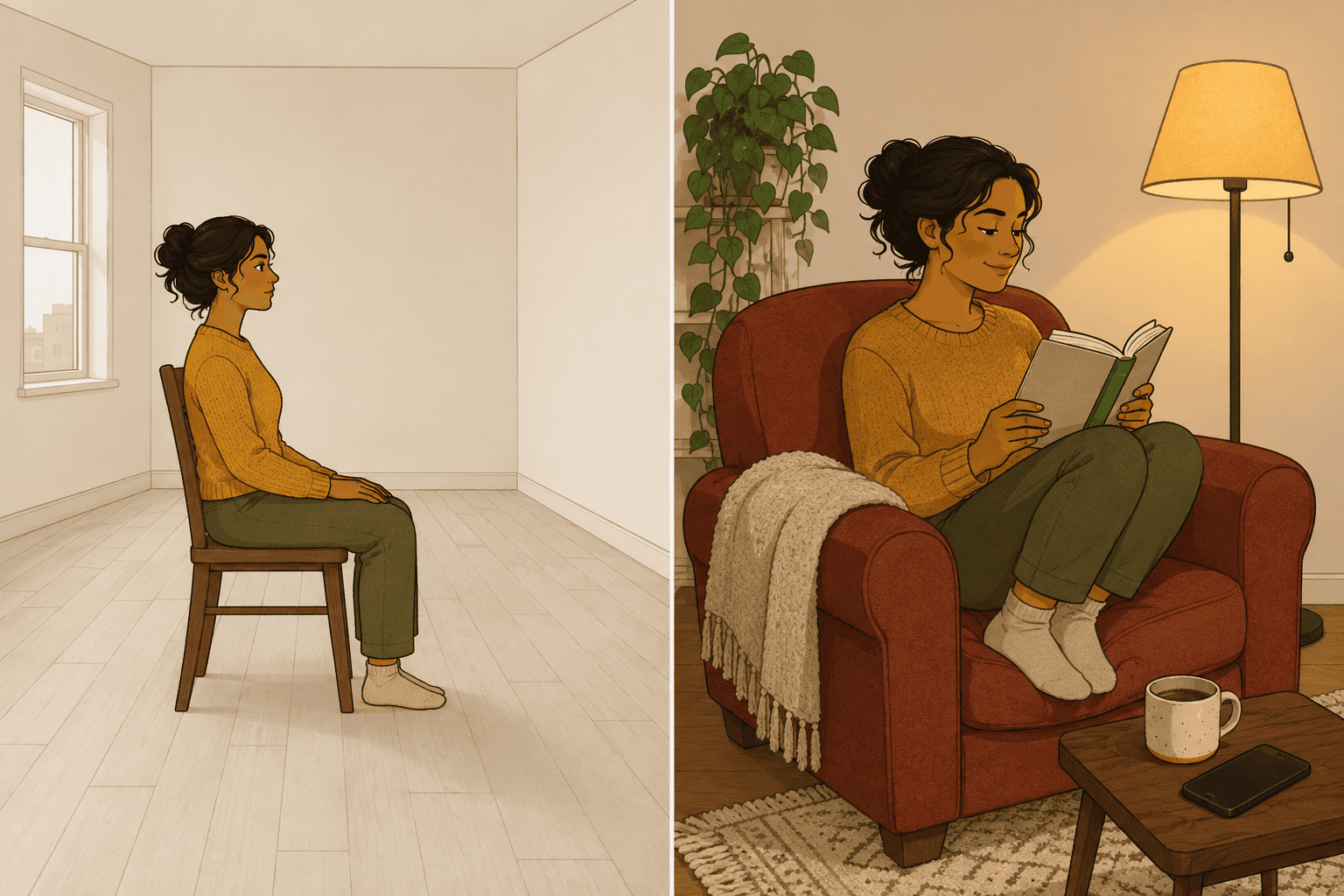
You have probably seen the videos: someone sits in an empty room for 24 hours with no phone, no music, and no food they enjoy, and calls it a dopamine detox. If you have also seen the videos explaining that the whole idea is nonsense, you are stuck in the awkward middle. That is exactly where I was.
I write about focus for a living and I have tested most of these ideas on myself, so this is the version I would give a friend: what the evidence actually supports, what it does not, and what to do tonight.
The habit all of this is trying to interrupt is the one you already know: the pickup at nine that somehow becomes midnight. A lot of people land here after trying to stop doomscrolling on willpower alone and watching it fail by Wednesday.
This guide covers what a dopamine detox actually is, why it helps even though the name is wrong, how the original version differs from the one that went viral, and a routine you can start this evening.
What a dopamine detox actually is (and why the name is wrong)
Strip the branding off and it is simple. A dopamine detox is a deliberate break from activities that hand you a big reward for almost no effort: the infinite scroll, the autoplay, the notification, the game you open at a red light.
Dopamine itself is a chemical your brain uses to tag something as worth doing and worth doing again. That is the whole job description we need.
Now the correction, and I would rather you hear it from me than from a stitched-together video with dramatic music. Your dopamine does not drop when you step away from stimulating activities, so a dopamine fast does not actually lower your dopamine levels. Nothing is being flushed out. Nothing is being emptied.
Which is a relief, honestly, because low dopamine is associated with Parkinson’s disease, depression, restless leg syndrome, and ADHD. “Less dopamine” is not a target any of us should be aiming at.
The clinician who invented the term agrees. Cameron Sepah, who used the idea with tech workers and investors in Silicon Valley, named it “Dopamine Fasting 2.0” in a 2019 article, and when the New York Times asked him about it he said the title’s not to be taken literally. His words: dopamine “is just a mechanism that explains how addictions can become reinforced, and makes for a catchy title.”
So is the whole thing nonsense?
No. And that gap, between a wrong name and a practice that people keep reporting as useful, is the actually interesting part.
So why does it seem to work?
Nothing chemical is happening. Two fairly ordinary things are, and neither of them needs a diagram of your brain to explain.
- You remove the easy option. Reading a chapter was never going to lose to nothing. It was losing to a feed built by a team of engineers whose entire job is making it hard to put down. Take the feed off the table for two hours and the chapter stops competing with something engineered to win.
- Idle time is doing something. Your default mode network, which is the group of brain areas that switches on when you are not busy with a task, is more active when you are idle than when you are concentrating. Staring out of a bus window is not wasted time. It is where the half-formed thought you have been avoiding finally surfaces.
The formal evidence is thinner than the confident videos suggest, and I would rather tell you that than pretend. A peer-reviewed review of this practice reports that people who follow this kind of routine may see less impulsive behavior, better focus, and less overwhelm. The same review warns that extreme versions carry real risks, and says plainly that the findings are inconsistent and there is no one-size-fits-all version of this.
Someone in a Reddit discussion about exactly this question put it better than any of the explainers I read. The practice “does not control dopamine, it just promotes wellbeing with already known healthy habits. Just a fancy name for what we should be doing.”
You will also hear people describe the aftermath the way they describe coming back to coffee after a week off it, everything hitting a bit harder than it used to. That is how the experience feels to a lot of people. It is not a mechanism I can point you to a study for, and I am not going to dress it up as one.
The viral version versus what the clinician who coined it suggested
Here is the thing almost nobody says out loud: the version on your feed and the version Sepah actually proposed are barely related. One is a 24-hour endurance stunt. The other is a schedule you could keep for a year without anyone noticing.
| What went viral | What was actually proposed |
|---|---|
| A full 24 hours, done once, filmed | One to four hours at the end of the day, repeated |
| No eating, no exercise, no music | Six specific behaviors, everything else left alone |
| No socializing, no talking more than necessary | Ordinary life continues, including the talking |
| A one-off challenge you either survive or fail | A cadence: one weekend day per week, one weekend per quarter, one week per year |
That left column is not me exaggerating for contrast. Harvard Health documented people avoiding eating, exercising, listening to music, socializing, talking more than necessary, and even being photographed with a flash, and named it as a departure from the moderate idea it grew out of. Someone posted recently that their detox consisted of work, reading, and staring at a wall, and a reply pushed back that it makes life feel so limited. The reply is the more useful half of that exchange.
And the six behaviors? Emotional eating, excessive internet use and gaming, gambling and shopping, pornography and masturbation, thrill and novelty seeking, and recreational drugs. Notice what is not on that list. Food in general, exercise, music, conversation, and your friends were never the target.
How to do a dopamine detox right
What follows is my own on-ramp, shaped by that moderate cadence rather than copied from it, and built so you finish the first attempt instead of abandoning it before dinner. This is not a screen-time schedule. If a day-by-day version built around your phone is what you actually want, my 7-day digital detox plan is that post, and the two work fine together.
1. Pick the one or two things you are actually detoxing from
The original protocol named six behaviors, not “everything fun”. You are picking from a list, not renouncing joy.
So which one costs you the most? Not which one sounds most impressive to give up, which one you would be embarrassed to see totaled at the end of the week. If you genuinely do not know, your phone’s own settings will tell you, and I walk through where to find those numbers in my guide on how to reduce your screen time.
Pick one. Two if you are feeling brave.
2. Start with a window, not a whole day
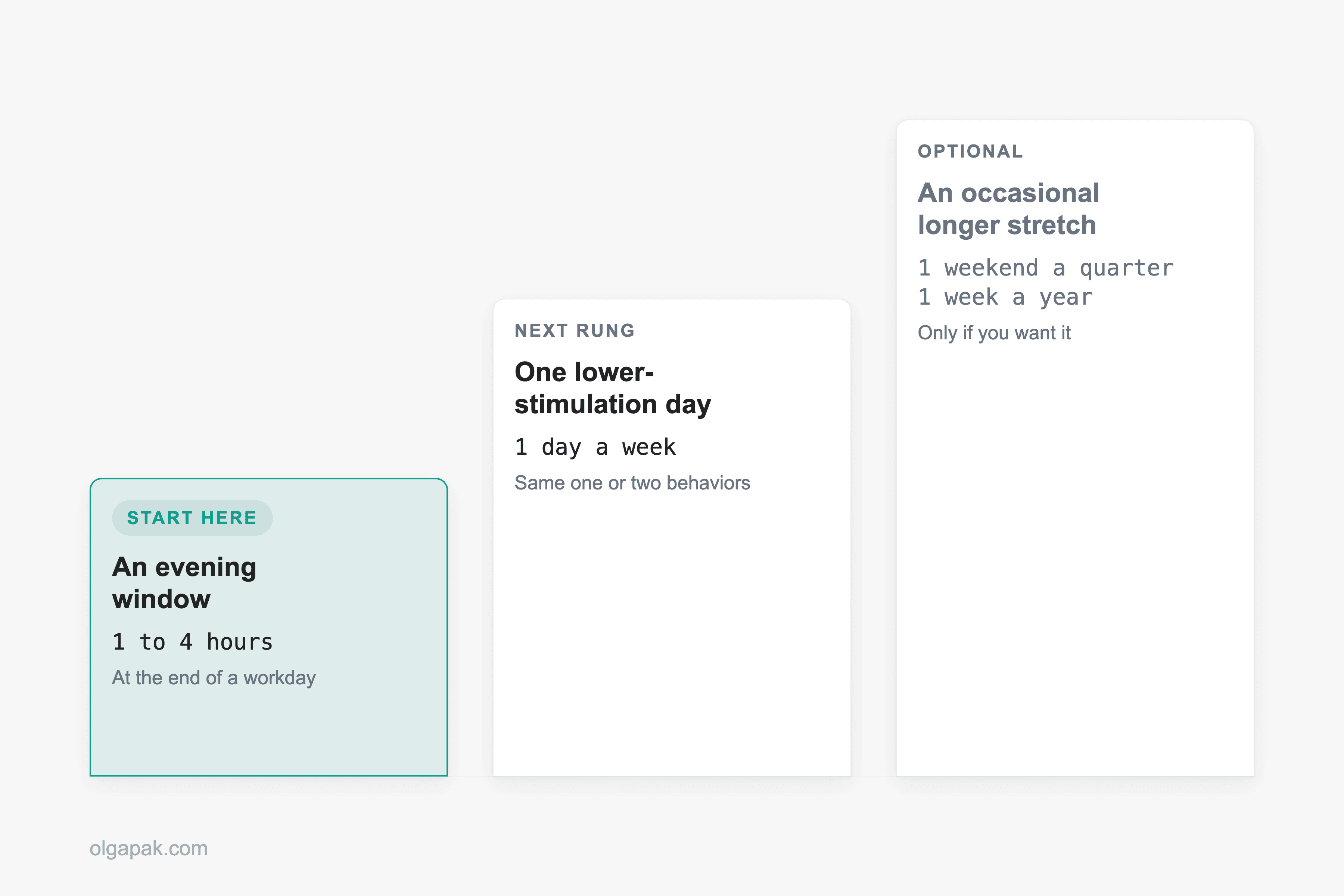
One to four hours at the end of a workday is where the original version starts, and it is the only version most people actually finish. Choose your window before the day begins, ideally the stretch where you already know you lose the evening.
Expect the first attempt to feel strange and slightly pointless. Someone on Reddit described theirs perfectly: “I tried one once and sat there for 20 minutes before I realized I was just thinking about TikTok. Feels like a scam idk.” That is not a failed detox, that is what withdrawal from a very well-designed product feels like, and it is also the most honest sentence in this whole topic.
3. Add one lower-stimulation day a week
Once an evening window stops feeling like a fight, one weekend day is the next rung. Same rules, same one or two behaviors, more hours.
The longer stretches in the original cadence, a weekend per quarter and a week per year, are genuinely optional. I am naming them because they exist, not because you owe anyone a week.
4. Decide what you will do instead, before you start
This is the single highest-value instruction in this post, and the viral version skips it entirely. An empty evening with no plan is not a detox, it is just an evening of being bored and annoyed at a productivity trend.
I learned this the slow way with my own work. For years I could not sit with a hard task for more than a few minutes, and I assumed the problem was the task. It was not.
It was that the gap between tasks had no shape, so it filled with my phone, which is Parkinson’s Law doing its thing: work expands to fill the time you give it, and so does scrolling. Giving each block a fixed start and stop, and deciding in advance what happened in the gaps, did more for my focus than any amount of resolve.
Write the replacement down before your window starts. On paper, or in a note, but decided.
What to do with the hours you get back
A detox with nothing on the other side of it is the reason people call this a scam. You take away the easy thing, you replace it with nothing, you sit there feeling flat, and you reasonably conclude the whole idea was oversold.
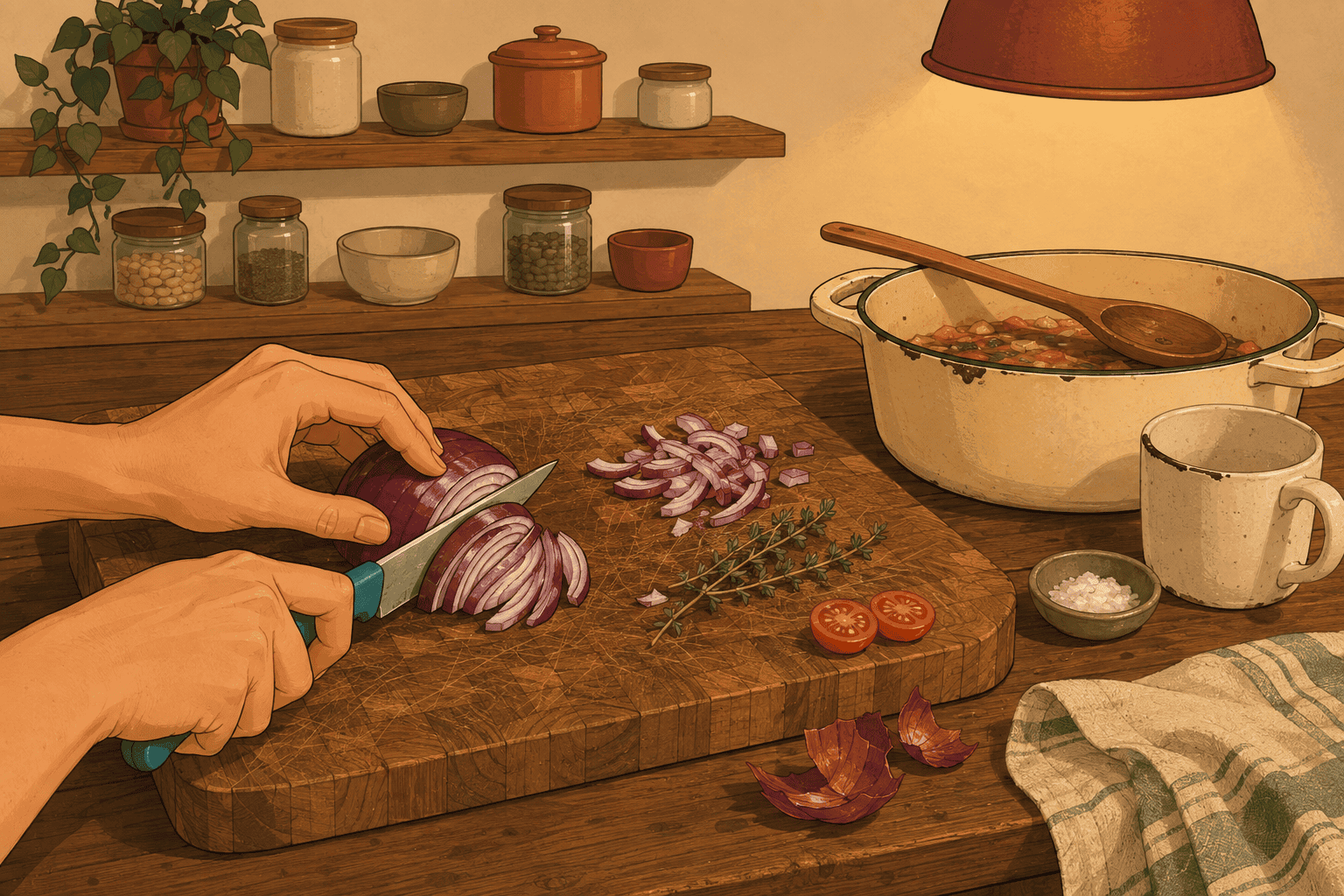
So stock the shelf in advance. Not “find a hobby”, which is advice nobody has ever acted on. Four specific things that work on a Tuesday:
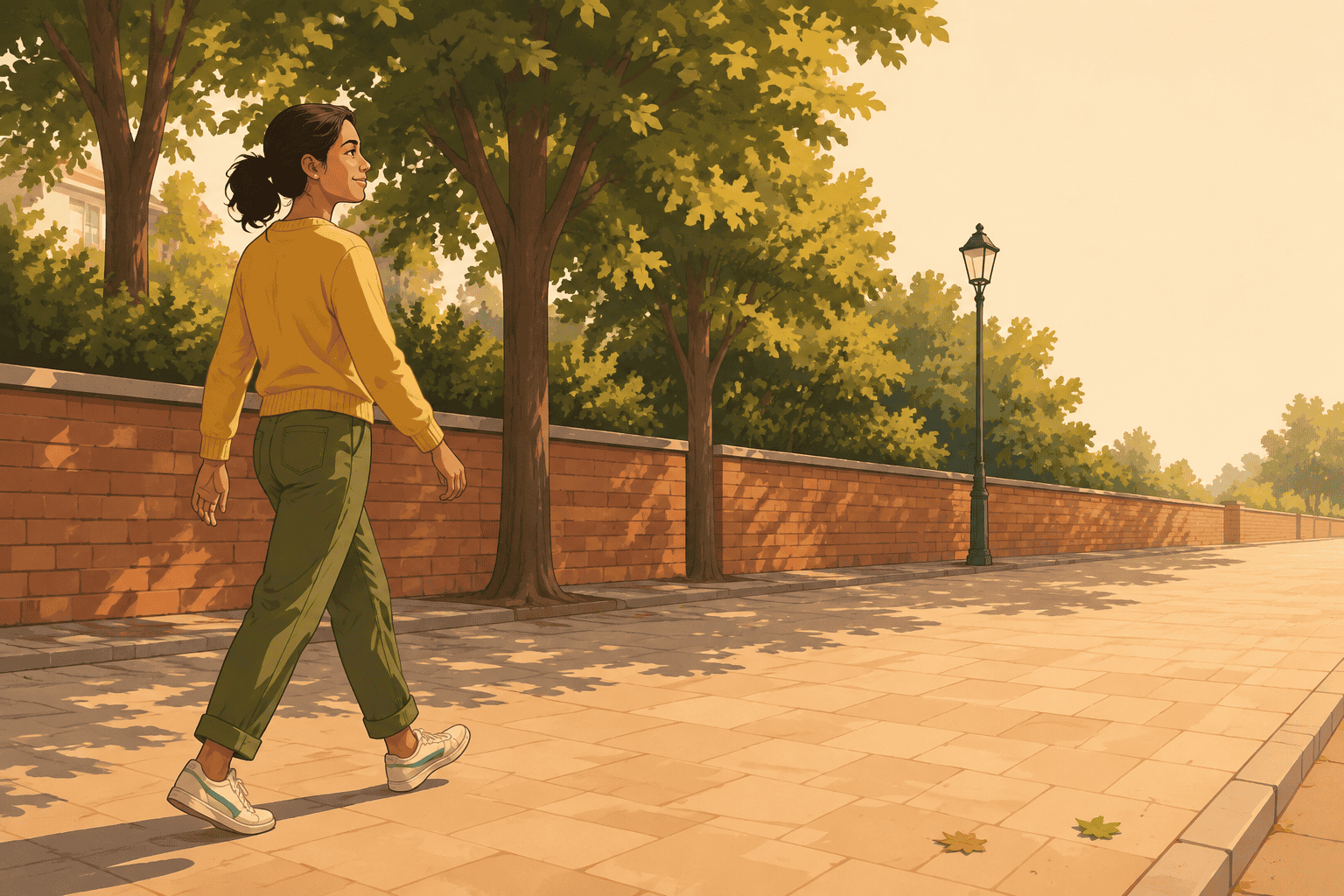
- A walk with no headphones and no podcast. This is the one that makes idle attention do its quiet work.
- Cooking something that needs attention, not something you can make while watching a video.
- A book you already own. Buying a new one is a way of postponing reading.
- One thing with your hands: a puzzle, a sketch, a repair, a plant that needs repotting.
If four options is not enough of a shelf, I keep a much longer list in my post on screen-free hobbies, and it is worth picking two or three before you need them rather than at the moment you are already bored.
Should you schedule any of this? For the reclaimed hours specifically, yes, at least at first. Putting the replacement in an actual slot, the way time blocking does, is what stops “I’ll read later” from turning into the phone again at ten.
When a dopamine detox is not the right tool
One of the sharpest things I read while researching this came from r/adhdwomen, where someone noted that content about detoxing “always ends up being an advertisement for some app with a paid membership.” Fair. This post is also content about the topic, so here is the boundary of what I am telling you.
This advice is not one-size-fits-all, and the confident version of it usually pretends otherwise. In that same thread, a commenter pushed back on the blanket rule directly, pointing out that it is written for brains that are not wired like hers: “I think that’s advice for neurotypicals. I describe it as my brain having spare bandwidth so if an activity isn’t very stimulating I can have spare bandwidth.”
That lands. Background audio during a dull chore is not automatically a bad habit to be stripped out. For plenty of people it is the thing that gets the chore done at all, and removing it does not produce focus, it produces an unfinished chore and a worse afternoon. Notice which of your habits are actually costing you something and which ones are quietly load-bearing.
And if the pull feels compulsive rather than merely annoying, or the attention problem clearly predates the phone, that is a conversation worth having with a professional rather than a protocol worth trying harder at.
The next step is not another rule about your phone
The reason a detox collapses is almost never willpower. It is that the reclaimed hours have nowhere to go, and the mundane work you were avoiding is still sitting there waiting for you at the end of them.
So take something off the pile before you take the phone away. Try my free AI tools to automate the mundane: the Text Summarizer will cut the reading pile that is still waiting at the end of your reclaimed hours down to something you can finish in one sitting.
FAQ
Does a dopamine detox actually work?
Yes for the behavior, no for the mechanism. Stepping away from high-reward, low-effort activities does seem to help people, but not because anything about your dopamine changes. It helps because the thing you actually wanted to do stops competing with something engineered to hold your attention. A peer-reviewed review reports that people following this kind of routine may experience less impulsive behavior and better focus, while noting that the evidence is inconsistent and extreme versions carry real risks.
How long should a dopamine detox last?
Start with one to four hours at the end of a day, which is where the original version begins and where most people who try it actually finish. A full day is the next rung up, not the entry point. If you have only ever seen the 24-hour version, know that you are looking at the stunt edition rather than the one Sepah proposed.
Can you really detox from dopamine?
No, and you would not want to. Dopamine does not drop when you avoid stimulating activities, so nothing is being flushed out, and low dopamine is associated with conditions nobody is trying to induce on a Saturday. The name is a marketing label, not a description of what happens in your body.
What should I do during a dopamine detox?
Anything absorbing and low-stimulation that you chose in advance, which is the part most versions skip. A walk without headphones, cooking something that needs your attention, a book already on your shelf, or one thing done with your hands all qualify. Staring at a wall is one version of this. It is not the definition of it.
Is a dopamine detox the same as a digital detox?
They overlap, but they are not identical. A digital detox is about screens specifically, while this is about the easy-reward habits behind the screen, some of which have nothing to do with a device at all. If screens are your actual problem, the structured week in my 7-day digital detox plan is the more direct fix.